


Are kiss cut holographic stickers resistant to scratches?
As a supplier of kiss cut holographic stickers, I often receive inquiries from customers about the durability of these eye - catching stickers, particularly their resistance to scratches. In this blog post, I will delve into the science behind scratch resistance in kiss cut holographic stickers, exploring the factors that influence it and providing practical insights for both consumers and businesses.
Understanding Kiss Cut Holographic Stickers
Before we discuss scratch resistance, let's briefly understand what kiss cut holographic stickers are. Kiss cutting is a technique where the sticker material is cut through only part of the way, leaving the backing intact. This allows for easy removal of individual stickers. Holographic stickers, on the other hand, are made with a special film that creates a three - dimensional, iridescent effect, changing colors when viewed from different angles.
These stickers are popular for a variety of applications, including product labeling, promotional materials, and personal use. Their unique appearance makes them stand out, but it also raises questions about how well they can withstand everyday wear and tear.
Factors Affecting Scratch Resistance
1. Material Quality
The quality of the materials used in kiss cut holographic stickers plays a crucial role in their scratch resistance. High - grade holographic films are typically more durable and less prone to scratching. These films are often made with advanced polymers that have better mechanical properties, such as higher hardness and toughness. For example, some premium holographic films are coated with a thin layer of scratch - resistant polymer, which acts as a protective barrier against abrasion.
When sourcing materials for our link text: Kiss Cut Sticker Roll, we carefully select suppliers who can provide high - quality holographic films. This ensures that our stickers can maintain their vibrant appearance even in challenging environments.
2. Coating and Lamination
In addition to the base holographic film, the coating and lamination processes can significantly enhance scratch resistance. A clear protective coating can be applied to the surface of the sticker, adding an extra layer of defense against scratches. This coating can be either a hard - coat or a soft - coat, each with its own advantages.
Hard - coat coatings are more rigid and offer excellent scratch resistance. They are suitable for applications where the stickers will be exposed to rough handling or abrasive surfaces. Soft - coat coatings, on the other hand, are more flexible and can provide a degree of self - healing properties. This means that minor scratches may disappear over time as the coating relaxes.
Lamination is another technique that can improve scratch resistance. By applying a thin layer of transparent film over the holographic sticker, we can protect it from direct contact with sharp objects or rough surfaces. Our link text: Kiss Cut Sticker Print products often undergo a lamination process to ensure maximum durability.
3. Usage Environment
The environment in which the kiss cut holographic stickers are used also affects their scratch resistance. Stickers used in industrial settings, where they may come into contact with machinery, tools, or rough surfaces, are more likely to get scratched compared to those used in a clean, indoor environment.
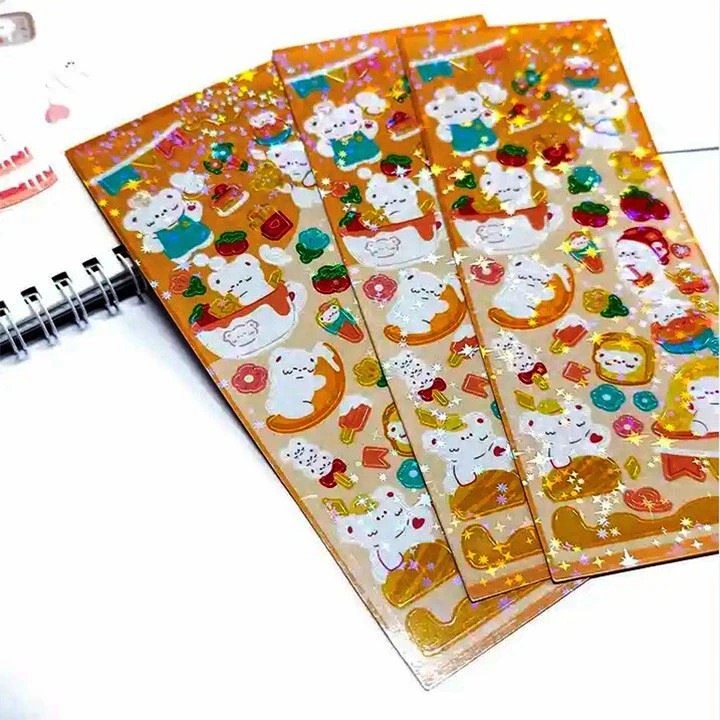

For example, if a holographic sticker is used on a product that is frequently handled during shipping and storage, it will be exposed to more abrasion. In such cases, it is important to choose stickers with higher scratch resistance. On the other hand, stickers used for decoration in a home or office setting may not require the same level of durability.
Testing Scratch Resistance
To ensure the quality of our kiss cut holographic stickers, we conduct various tests to measure their scratch resistance. One common method is the pencil hardness test. In this test, pencils of different hardness levels are used to scratch the surface of the sticker. The hardness of the pencil that first leaves a visible scratch on the sticker indicates its scratch resistance.
Another test is the Taber abrasion test. This test involves rubbing the sticker surface with an abrasive wheel under a specific load for a certain number of cycles. The amount of wear and tear on the sticker is then measured to determine its abrasion resistance.
By performing these tests, we can accurately assess the scratch resistance of our stickers and make informed decisions about material selection and manufacturing processes. This allows us to offer our customers link text: Kiss Cut Sticker Sheet Custom products that meet their specific requirements.
Practical Tips for Maintaining Scratch Resistance
Even with high - quality kiss cut holographic stickers, there are some practical steps that users can take to maintain their scratch resistance:
- Avoid Rough Surfaces: When applying the stickers, try to choose smooth surfaces to minimize the risk of scratching. Avoid placing the stickers on rough or textured materials.
- Use Protective Covers: If the stickers are used on products that are likely to be exposed to abrasion, consider using protective covers or cases. This can provide an extra layer of protection for the stickers.
- Clean with Care: When cleaning the stickers, use a soft, lint - free cloth and a mild cleaning solution. Avoid using abrasive cleaners or scrubbing the stickers too hard, as this can cause scratches.
Conclusion
In conclusion, kiss cut holographic stickers can be resistant to scratches, but it depends on several factors, including material quality, coating and lamination, and usage environment. As a supplier, we are committed to providing high - quality stickers that offer excellent scratch resistance. By carefully selecting materials, using advanced manufacturing processes, and conducting rigorous testing, we ensure that our stickers can maintain their beautiful appearance even in challenging conditions.
If you are interested in purchasing kiss cut holographic stickers for your business or personal use, we would be more than happy to discuss your requirements. Our team of experts can provide you with detailed information about our products and help you choose the best solution for your needs. Contact us today to start the procurement process and bring the magic of holographic stickers to your projects.
References
- ASTM International. (20XX). Standard test methods for abrasion resistance of organic coatings by the Taber abrader. ASTM D4060 - XX.
- ASTM International. (20XX). Standard test method for film hardness by pencil test. ASTM D3363 - XX.
