


Do kiss cut holographic stickers have a strong smell?
As a supplier of kiss cut holographic stickers, I often get asked about the smell of our products. It's a valid concern, especially for those who are sensitive to odors or plan to use the stickers in enclosed spaces. In this blog post, I'll share some insights into the potential smell of kiss cut holographic stickers and what we do to ensure our products meet high - quality and low - odor standards.
Understanding Kiss Cut Holographic Stickers
Before delving into the smell issue, let's briefly understand what kiss cut holographic stickers are. Kiss cutting is a process where the blade cuts through the sticker material but not the backing paper. This allows for easy peeling of individual stickers. Holographic stickers, on the other hand, feature a holographic effect that gives them a shiny, iridescent appearance, making them visually appealing for various applications such as product labeling, event decoration, and personal crafts.
Our company offers a wide range of kiss cut holographic stickers, including Kiss Cut Sticker Print, Kiss Cut Sticker Roll, and Kiss Cut Sticker Sheet. Each product is carefully crafted to meet the diverse needs of our customers.
Factors That Can Cause a Smell
Printing Inks
The printing inks used on holographic stickers can be a source of odor. Some inks contain volatile organic compounds (VOCs), which are chemicals that can evaporate at room temperature and release a smell. Traditional solvent - based inks tend to have a stronger odor compared to water - based or UV - cured inks. Solvent - based inks use solvents to dissolve the pigments and binders, and these solvents can emit a strong, often unpleasant smell during the drying process.
Adhesive
The adhesive on the back of the sticker is another factor. Some adhesives are formulated with chemicals that can produce an odor. For example, rubber - based adhesives may have a distinct smell, especially when they are freshly manufactured. High - quality adhesives are designed to have a low odor, but cheaper or lower - grade adhesives might have a more noticeable smell.
Holographic Coating
The holographic coating applied to the sticker material can also contribute to the smell. The chemicals used in the coating process, such as certain polymers or resins, may release odors as they cure or dry. Additionally, if the coating is not properly cured, it can continue to emit a smell over time.
Our Approach to Minimizing Smell
Ink Selection
At our company, we are committed to using the best - quality inks to minimize odor. We primarily use water - based and UV - cured inks. Water - based inks have a significantly lower VOC content compared to solvent - based inks. They are environmentally friendly and have a much milder smell. UV - cured inks are also a great option as they cure almost instantly under UV light, reducing the amount of time for any potential odor - causing chemicals to evaporate.
Adhesive Quality
We source our adhesives from reputable suppliers who focus on producing low - odor products. Our adhesives are tested to ensure they meet strict quality standards. We also allow our stickers to go through a proper aging process after the adhesive is applied. This aging process helps the adhesive to fully set and any potential odors to dissipate before the stickers are packaged and shipped to our customers.
Coating Process
Our holographic coating process is carefully monitored to ensure proper curing. We use advanced equipment and techniques to control the temperature, humidity, and curing time during the coating process. This helps to ensure that the coating is fully cured and any odor - causing chemicals are eliminated.
Testing and Quality Assurance
We conduct thorough testing on our kiss cut holographic stickers to ensure they have a minimal smell. Our quality control team uses a combination of sensory evaluation and laboratory testing. In the sensory evaluation, trained personnel smell the stickers to detect any noticeable odors. If a sticker has a strong or unpleasant smell, it is rejected.
In the laboratory, we use gas chromatography - mass spectrometry (GC - MS) to analyze the VOC content of our stickers. This technique allows us to accurately measure the amount of volatile organic compounds present in the stickers. We ensure that our products meet the relevant industry standards for VOC emissions.
Customer Experiences
Over the years, we have received positive feedback from our customers regarding the smell of our kiss cut holographic stickers. Many customers have noted that our stickers have a very mild or almost non - existent smell, even when used in large quantities. For example, a craft store owner who purchased our Kiss Cut Sticker Sheets for their in - store workshops mentioned that the stickers did not cause any odor issues in the enclosed workshop space.
Conclusion
In general, kiss cut holographic stickers do not have to have a strong smell. With proper ink selection, high - quality adhesives, and a well - controlled coating process, it is possible to produce stickers with a minimal odor. At our company, we are dedicated to providing our customers with kiss cut holographic stickers that not only look great but also meet the highest standards in terms of smell and quality.
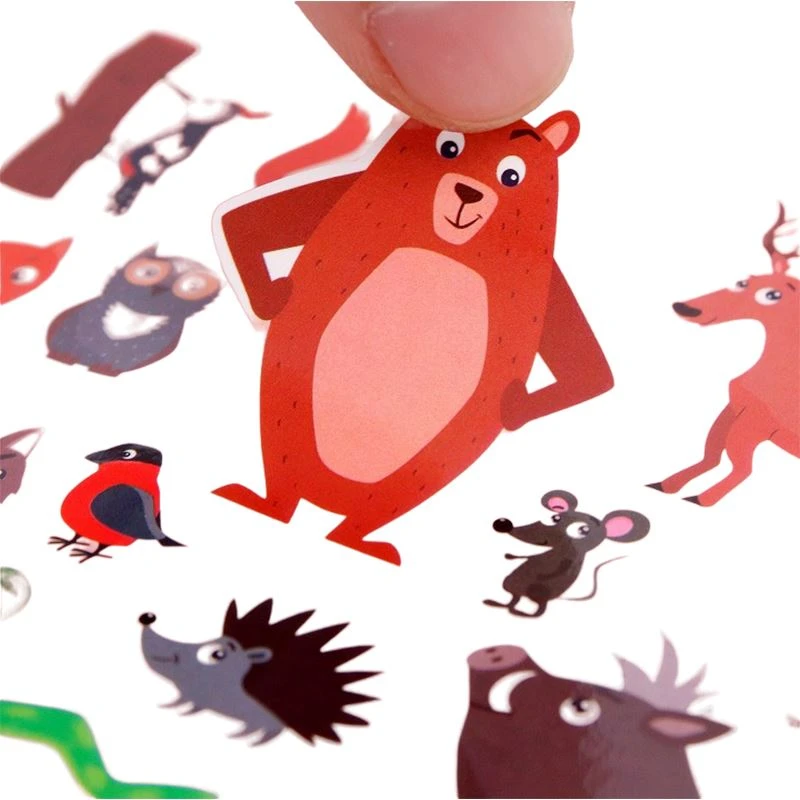

If you are interested in purchasing kiss cut holographic stickers for your business or personal use, we invite you to contact us for more information. We can discuss your specific requirements and provide you with samples so that you can experience the quality of our products firsthand. Whether you need Kiss Cut Sticker Print, Kiss Cut Sticker Roll, or Kiss Cut Sticker Sheet, we are here to serve you.
References
- ASTM International. (2023). Standard test methods for volatile organic compounds (VOC) in paints and related coatings.
- European Union. (2022). Directive on the restriction of the use of certain hazardous substances in electrical and electronic equipment (RoHS).
- Smith, J. (2021). The chemistry of printing inks and their environmental impact. Journal of Printing Science and Technology, 45(2), 123 - 135.
